5 Window & Door Trends Reshaping Indianapolis Luxury Homes in 2026
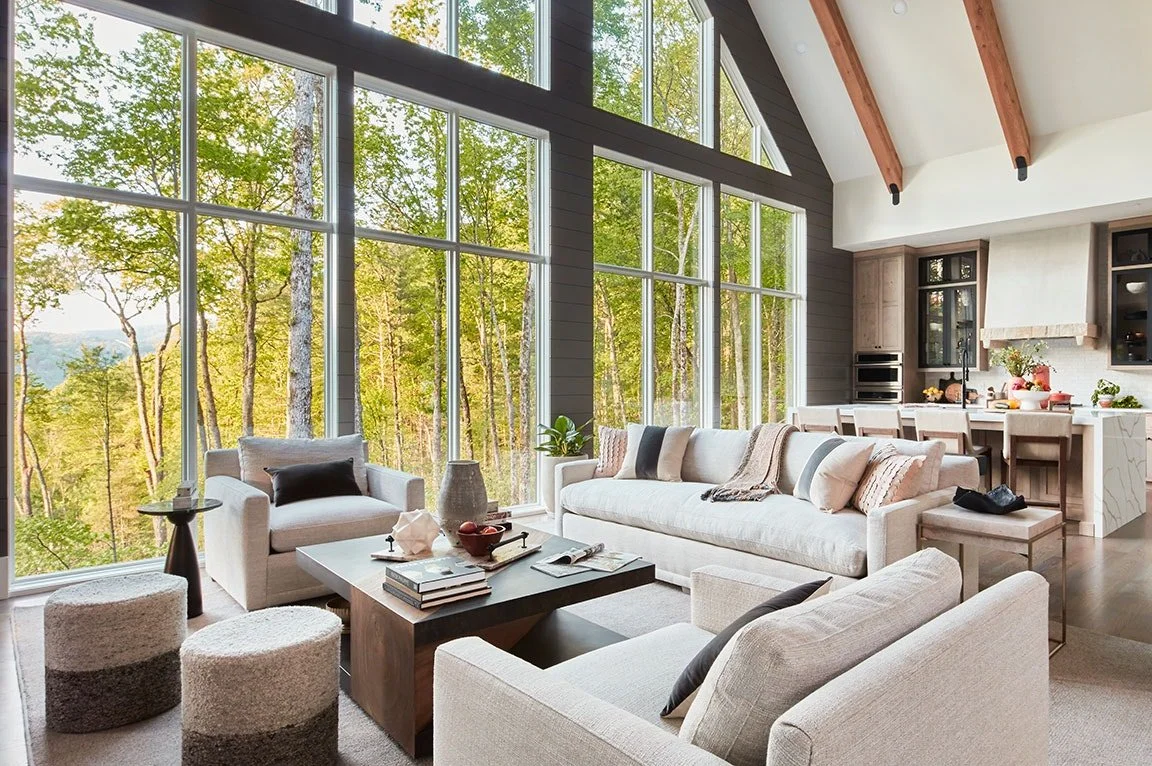
Living Room with Floor to Ceiling Window from Pella.com
The luxury home market entered 2026 with clear momentum in one direction: the walls are coming down.
Not literally. But the traditional barriers between indoor and outdoor living are disappearing faster than ever, and Indianapolis luxury builders are feeling the pressure to keep pace.
What started as an occasional "wow factor" request has become the baseline expectation in $2M+ homes across Hamilton County lakefront properties, Carmel estates, and Geist waterfront builds.
But it's not just about bigger glass anymore. The trends shaping 2026 are more sophisticated, more technical, and more demanding on installation quality than anything we've seen before.
Here are the five trends Indianapolis luxury builders need to understand as we move into 2026.
TREND 1: Indoor-Outdoor Living Becomes Non-Negotiable
The Data: According to the 2024 Remodeling Impact Report, patio projects saw a 55% year-over-year increase in demand. That momentum carried straight into 2026, with bi-fold doors, multi-slide systems, and lift-and-slide panels becoming standard specifications (not upgrades) in luxury homes.
What's Driving It: Gen-X and Millennial luxury homebuyers prioritize experiences over square footage. They've stayed in high-end hotels with disappearing glass walls. They've toured homes where the great room flows seamlessly onto covered terraces. They expect that same experience in their custom builds.
The Indianapolis Reality: Geist lakefront homes with floor-to-ceiling glass maximizing water views. Carmel estates where entire back walls retract into pocket openings. Hamilton County properties with outdoor living spaces that rival interior square footage.
The Installation Challenge: A 20-foot multi-panel glass door system weighs 800-1,200 pounds. Panel alignment must be precise within 1/16" tolerances. These aren't "bigger patio doors." They're engineered systems requiring structural load calculations, precision leveling across 20+ foot spans, and multi-point sealing that must perform through Indianapolis's 60°+ temperature swings.
Standard framing expertise doesn't cover this. Specialized installation does.
TREND 2: Sustainability Meets Performance (Triple Glazing Goes Mainstream)
The Shift: Energy efficiency is no longer about meeting code minimums. In 2026, luxury homebuyers expect performance that significantly exceeds standards, and they're willing to invest in systems that deliver.
Triple-glazed window systems (once reserved for extreme climates) are becoming standard in Indianapolis luxury builds. Why? Because they deliver measurable comfort improvements and energy cost reductions that matter to homeowners focused on long-term value.
What Triple Glazing Actually Means: Three panes of glass with two insulating air spaces. Dramatically improved thermal performance. Better sound insulation. Reduced condensation on glass surfaces during Indianapolis's humid summers.
The Installation Reality: Triple-glazed units are heavier. Structural support requirements increase. Installation precision becomes even more critical because thermal performance depends on proper sealing and weather barrier integration.
Builders who treated windows as commodity items are discovering that performance systems require performance installation.
TREND 3: Floor-to-Ceiling Glass Creates Architectural Drama (And Installation Complexity)
The Design Appeal: Floor-to-ceiling glass maximizes views, floods spaces with natural light, and creates that "seamless transition" between interior and exterior that defines modern luxury.
Architects are spec'ing these systems in great rooms, primary suites, and even bathrooms overlooking private courtyards. It's become the signature element that elevates a luxury home from nice to exceptional.
The Structural Challenge: When glass extends from floor to ceiling, there's no room for error. Header load calculations become critical (you're supporting significant weight with no intermediate support). Floor flatness must meet manufacturer specifications (not code, manufacturer spec) because even minor deviations translate to panel binding and seal failures.
Weather barrier integration at massive openings requires completely different approaches than standard window flashing. A 12-foot-tall glass wall experiences wind loads, driving rain, and temperature differentials that demand engineered solutions.
What This Means for Installation: Manufacturers like Andersen created Elite certification programs specifically because these systems require installation precision that exceeds standard carpentry. Equipment requirements alone (hydraulic panel lifts, precision leveling systems, specialized fastening tools) represent $40,000+ investments that most framing contractors simply don't carry.
TREND 4: Built-In Furniture Integration Requires Pre-Construction Coordination
The Design Evolution: 2026 luxury homes are incorporating built-in furniture that requires precise window placement: breakfast nooks positioned to capture morning light, window seats framing specific views, built-in desks oriented toward natural light sources.
This sounds simple until you realize: these built-ins are often designed AFTER window rough openings are framed.
The Coordination Problem: Six trades must coordinate before window installation: framing (header engineering for actual panel weights), foundation (floor prep to manufacturer specifications), HVAC (return air placement that doesn't conflict with panel pockets), electrical (outlet locations compatible with motorized systems), finish carpentry (built-in furniture requiring exact window placement), and flooring (flush threshold requirements without transitions).
Miss one coordination point, and you're either absorbing unexpected costs to fix structural issues or explaining to homeowners why their $45,000 system doesn't work with their custom breakfast nook.
The Pre-Construction Solution: Elite installers walk sites 3-4 weeks before installation. Not to sell earlier. To verify rough opening dimensions against manufacturer specs, check header beam sizing for actual system weight, confirm floor substrate can support track loads, and catch conflicts before they become $15,000-$40,000 reframing projects.
TREND 5: Liability Transfer Model Gains Momentum (The Wedgwood Effect)
The Business Model Shift: Smart Indianapolis builders are recognizing what electrical contractors figured out 20 years ago: when products become sophisticated enough to require specialized installation, the liability doesn't belong with general construction.
Wedgwood Builders made this shift in 2024. They stopped bundling window and door installation under framing contracts. Started recommending specialized installers directly to homeowners. Removed themselves from the installation equation entirely.
Why This Matters: 95% of window and door warranty claims are installation-related, not product defects. When a $45,000 system fails, homeowners blame the manufacturer. The manufacturer knows it's installation. The builder is caught in the middle managing warranty coordination and reputation damage.
When installation is bundled, that's the builder's problem. When builders partner with manufacturer-certified specialists, installation liability transfers appropriately. The manufacturer backs the installation with extended warranties. The builder focuses on building exceptional homes instead of managing callbacks on premium systems.
The 2026 Reality: This model is accelerating. Builders who recognize installation as a separate skilled trade (same as electrical, HVAC, and plumbing) are protecting their reputations while delivering better outcomes for homeowners.
Those who continue bundling installation under framing are absorbing risks they're not trained to manage.
What These Trends Mean for Indianapolis Luxury Builders
2026 isn't about choosing whether to adopt these trends. Luxury homebuyers are demanding them. Architects are spec'ing them. The question is whether builders are prepared for the installation complexity these trends create.
Indoor-outdoor systems, triple-glazed performance windows, floor-to-ceiling glass, built-in furniture integration, and liability transfer models all point in the same direction: installation has evolved into a specialized trade requiring manufacturer certification, precision equipment, and climate-specific expertise.
The technical requirements (structural load management, 1/16" precision alignment, multi-point sealing, operational testing) exceed standard framing expertise.
The Indianapolis climate challenges (thermal cycling between 90°F summers and sub-zero winters, 70%+ humidity, spring storm wind loads) require installation approaches accounting for seasonal extremes.
The pre-construction coordination (rough opening verification, six-trade coordination, built-in furniture planning) prevents the expensive remediation projects that damage builder reputations.
For builders serving Indianapolis luxury markets in 2026, understanding these trends isn't optional. It's the difference between leading the market and struggling to keep up.
The walls are coming down. Make sure your installation partners are ready.
Blue Theory Construction | Elite Andersen Premium Certified | Specialized Window & Door Installation for Indianapolis Luxury Homes
For partnership inquiries or project consultations, connect with us on LinkedIn or visit https://www.bluetheoryconstruction.com/contact-us